
Print
version
version

According to very rough estimates, there are more than two and a half million cities in the world. And we are talking only about the official status of the city, without villages, towns, provinces, etc. Given this number, it is becoming increasingly difficult to choose a perfect name.
Although this task has never been easy. It's not a secret for anyone that lots of cities in the United States repeat the names of existing places, sometimes more than once (the country has 25 more settlements with the name "Moscow" than Russia does, not a joke).
Of course, it is normal to give already existing names. Almost all of us have met our own namesakes. But not all locals and discoverers decided to go the easy way. Let's find out what reasoning some of them had.

This capital of a Turkish province was named after... a river! No, there are no human-looking bats. It's all about the nearby Bati Raman Mountains, from which the name of the area came from originally.
In 2008, the city was embroiled in a scandal by its own mayor: he threatened to sue Warner Bros. and film director Christopher Nolan for using the name, but it didn't go further than threats. However, the locals enjoy this analogy: they even signed a petition to change the region's borders to the shape of a bat.

Eggs and bacon make a splendid combination, massively appreciated by the international community, worthy of becoming the name of the bay! But Australians have decided that it is better to give the name in honor of the wild flower growing on its shore. Someone once decided that this bright yellow-red flower reminds them of scrambled eggs for breakfast. They must have been very hungry. Among botanists it is called lotus corniculatus (in Latin), but it does not sound as appetizing.

A small town on the shore of lake Wawa is named after a goose. More precisely, in honor of the original name that local indigenous tribe had for wild geese - "wewe". In general, there is nothing more to tell about this small town with a population of 3,000 people. Except for a massive metal statue of a goose 8.5 meters high, which attracts tourists. It is the most worthy reason to finally apply for a Canadian visa, isn't it?

Remember the time when the name of the Icelandic volcano Eyjafjallajökull caused horror among journalists around the world? Let's be grateful that there are no volcanoes in the small Welsh village on the island of Anglesey, which is affectionately (and shortly) called Llanfair Pwllgwyngyll.
This is the longest toponymic name in Europe, which simply describes the location of the village. In Welsh it means "St Mary's church of the pool of the white hazels over against the pool of St Tysilio Gogo [Tysilio of the cave]". Nobody can explain what prevented the authors of the name from finishing the name on, say, hazels, and why such a detailed name was necessary. But it is generally believed that back in the 80s of the 19th century, the name was given for the purpose of advertising and attracting tourists. Well, if we make the whole article about it, then mission accomplished.

In 1765, the islands were discoverer by the Lord Byron's grandfather, John Byron, who was sailing around the tip of South America when he accidentally came across a tiny island in the distance. The exhausted and tired crew were initially happy to be ashore, but the locals with their spears were looking rather steady than friendly, and the coral reefs did not allow the ship to get closer to dock safely. Apparently, all hopes of a respite were destroyed, and Byron took revenge on a whole group of islands, giving them a sad, though beautiful name.
Now you can book a bungalow with the view of white sandy beaches and bright blue water. But no one ever tried to change the name. Maybe, for a reason.

This village is famous for its name, which last year was written as "Fucking" (the accent on [ʊ]). In fact, the place is very old, it has existed since 1070. The name has changed many times since its foundation. The main theory is that the name of the village means "the place of the Focco people". History is silent on who or what the Fokkos are, but etymologically should be so.
In the modern world, the village has become popular among English-speaking tourists, for whom the former name literally means... Um... You know what it means. At first, everything has been going well, tourists have brought some noticable profit. However, this did not prevent them from a regular theft of the road signs with the name, causing damage to the village's budget. As a result, local residents got so tired of the frenzied public interest that the village was renamed in January 2021. It is officially your fault, guys.

The municipality of Ii is not so small by Finnish standards, almost 10 thousand people live there. But it became famous not only for one of the shortest names in Finland and the world. Back in 2019, the authorities wanted to completely switch to waste-free production and abandon the use of fossil fuels. I guess, they really succeeded in atchieving their goals in 2020. Nature and the pandemic for sure were on their side all along.

Truth or consequences? The residents of a town in New Mexico decided not to choose.
The city of 6,000 people was known for its hot springs and was once called Hot Springs (not very original, I know). The resort town dreamed of changing its banal name to something more intriguing.
The chance was given by the host of the radio show of the same name "Truth or Consequences" in 1950. In honor of the quiz show's tenth anniversary, the radio host Ralph Edwards has announced that he will host the anniversary broadcast from the city that is ready to rename itself after the show. Thus, Hot Springs officially changed the name on March 31, 1950.
The program actually was hosted there, although the measures taken seem a bit too radical. However, it is more interesting than it was before, and now even you, dear readers, have learned about a small town in the middle of American nowhereness.

Another northern eccentric founders. In fact, this one-letter word translates as a "small river". A small but picturesque fishing village is located on the Lofoten Islands in northern Norway. But if you think that it is the one and only, you are wrong: it is often referred to as "Å in Lofoten". Why? To avoid confusions with other villages with the same name… Well, it seems that even Americans are better at handling original names, even if it requires help of a radio show.

The traditional Bavarian town with a population of 12,000 was first mentioned in the 9th century, thanks to a Benedictine monastery. Franckly speaking, it has fairly regular history by German standards, filled with medieval conflicts and periodic bursts of development.
However, none of these events explains why the city is called "Moist cheeks". A conspiracy theory – people came here to cry and did it collectively. A more realistic version has something to do with the monastery and the pilgrimage. Modern Germans remain silent. Maybe they have something to hide. But we don't judge, especially today.
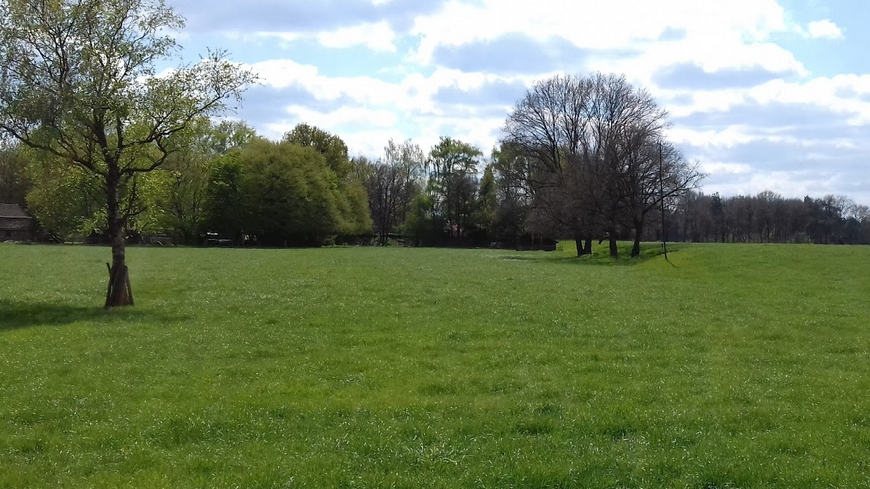
We are talking about a very small settlement near Eindhoven. So small, it doesn't have a Wikipedia page (which, you know, says a lot). It is not a surprise: in a small country, where cities and towns flow from one to another, it is simply impossible to stand out. But the inhabitants of Gebergte have succeeded. How?
Easy. The name translates as a "Mountain Range". And it would be totally fine, but there are no mountains in the Netherlands. It is not clear what has prompted the name of the settlement. Either the locals didn't know how mountains look like, or they had a serious case of mass wishful thinking. But now, if someone says that there are no mountains in Holland, you can safely plunge your opponent's face into their own ignorance. Because you know for sure that there is a whole Mountain Range in Holland!


